
Toddler Solutions
from a nurse mom
It’s always at night. He was fine at bath time. Now he’s stuffed up, coughing, and tossing around, and nobody in the house is sleeping. I’ve been the tired mom in that doorway more than once.
This is what I do to make a stuffy, coughing toddler more comfortable at night. It’s general education from a nurse mom, not medical advice. Every kid is different, so your pediatrician always has the final say.
Start with the nose
Toddlers can’t blow their noses, so a blocked nose means noisy breathing, mouth breathing, and a cough from drip. Clearing it is the first thing I try.
- Saline first. A drop or two of saline in each nostril loosens things up.
- Then gentle suction. Use a nasal aspirator softly. Don’t dig and don’t overdo it, because a sore nose makes everything worse.
- Do it before sleep. A clearer nose at bedtime and again if he wakes can buy you a longer stretch.
Humidifier: placement and cleanliness
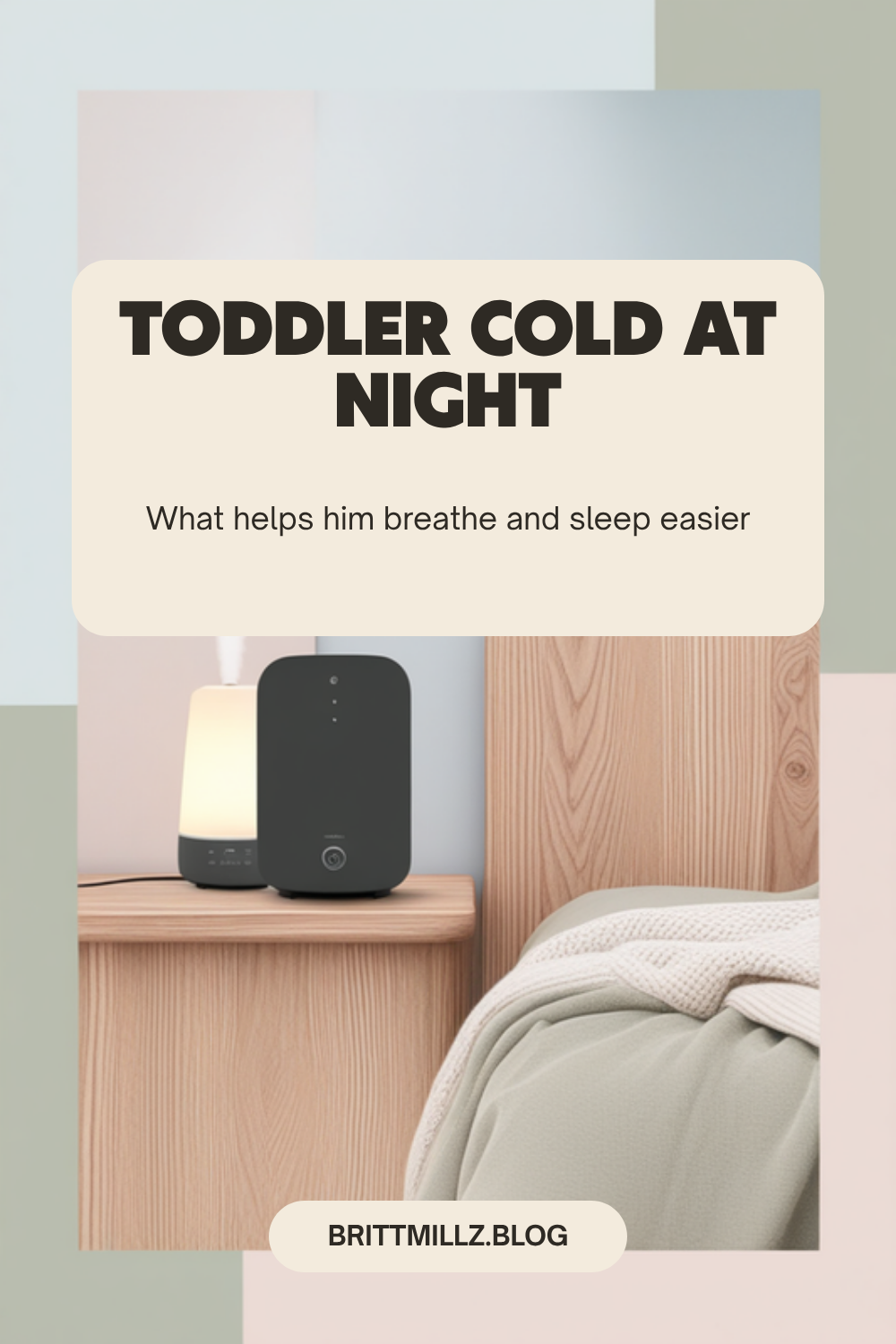
Moist air can make a stuffy nose feel better. But a dirty humidifier is worse than none, so this part matters.
- Keep it across the room. Put it on a sturdy surface well out of his reach, with the cord tucked away. Aim the mist so it isn’t blowing right on the crib or bed.
- Use a cool mist model. Skip anything that heats water near a little one.
- Empty, rinse, and dry it every day. Don’t let water sit. Follow the maker’s cleaning directions for the deeper clean.
- Watch for damp. If the window or walls get wet, you have too much mist. Turn it down.
Fluids and comfort
- Offer small sips often. Water, or whatever your pediatrician okays for his age. Little and often works better than a big cup he’ll refuse.
- Count the wet diapers. It’s the easiest way I know to see if he’s drinking enough.
- Raise the head of the mattress only if your pediatrician says it’s okay. Don’t prop pillows under a little one, and keep the crib or bed clear of loose items.
- Keep him close. Extra cuddles, a quiet song, a dim light. Rest is part of getting better.
- Dress him in light layers. Overbundling makes a restless kid more restless.
Make the room work for sleep
A few small changes help the whole night go smoother. Keep the room calm and a comfortable temperature, not hot. Keep the lights low when you check on him. Skip screens and stimulating play, even if he’s wide awake and cranky. If he wakes coughing, stay with him for a few minutes, rub his back, and offer a sip. Most nights, a calm voice does more than you’d think.
Wash your hands after wiping noses and handling the aspirator. Rinse and air dry the aspirator after each use. Wash his bedding if it gets damp or gross. It sounds like extra work, but it keeps the rest of the house from catching it.
My nurse-mom take
Nurse note: In the OR and the ER, the thing we trust most is a pattern over time, not one scary moment. A cough sounds awful at 2 a.m. What I want to know is: how is he breathing, is he drinking, is he peeing, and is he getting better or worse? Write it down so you’re not guessing. And ask your pediatrician before giving any medicine, including cold and cough products.
Keep notes in the Sick Day Log
When you’re half asleep, you will not remember what time he last drank or how many diapers he’s had. That’s why I use my Sick Day Log. One page tracks temps, fluids, diapers, symptoms, and anything you give. When you call the nurse line, you can read it right off the page. The full printable is in my Shift Insanity Etsy shop.
If a fever is part of the picture, here’s what I actually check at 2 a.m. And if you want your supplies in one spot before the next cold hits, here’s how I set up my sick day kit.
Night checklist
- Saline, then gentle suction.
- Humidifier on, across the room, clean and dry from the day before.
- Small sips offered.
- Light layers, clear sleep space.
- Note the time, what you did, and how he’s breathing in the Sick Day Log.
- Check on him again before you fall back asleep.
The saline, aspirator, and humidifier are things I keep on my Amazon storefront, so you can see them all in one place.
When to call the doctor or go to the ER
Get help right away if you see:
- Trouble breathing, or fast or labored breathing
- Blue or gray lips or face
- Signs of dehydration, like no wet diaper in 8 or more hours
- Fever in a baby under 3 months
- Unusual sleepiness, or he’s hard to wake
- Severe ear pain
Call your pediatrician if: a fever lasts more than a few days, symptoms get worse instead of better, or something just feels off to you.
When in doubt, call your pediatrician or nurse line.
This is general education, not a diagnosis, and it doesn’t replace your child’s doctor. You know your kid best. If your gut says something is wrong, act on it.
More toddler help: Browse every post, printable, and sick day tip on the Toddler Solutions hub →
Some links are affiliate links, so I may earn a small commission at no extra cost to you. I only list things I’d tell my sister to buy.
Leave a Reply